Explore a total of 4 UNESCO sites in Rwanda all year round. The United Nations Educational, Scientific and Cultural Organization (UNESCO) is an organization responsible for promoting educational, scientific, cultural, and natural sites across the world. UNESCO sites in Rwanda are either educational, cultural, scientific, or natural as they are according to its rules.
Rwanda in this case has several UNESCO sites, culturally, educationally, and naturally significant. Rwanda as a small landlocked country has always been an underdog living in the shadow of its neighbors. However, as time moved this small country defied the odds and has risen to glory. Rwanda at a time of its prime development experienced tragedy that left it in ruins.
Even during civil wars that followed Rwanda’s independence, fight for leadership intensified, until the country experienced relative stability in 1973. This was under the regime of the Hutu president Juvenal Habyarimana, who fought his way to the highest office in the land. However, like his predecessor, Rwanda started developing faint lines of weakness, and other dangerous conflicts followed. The populace pointed out the unfairness and corruption within the regime.
A group of Rwanda refugees who had fled the country during past struggles declared war on the regime. However, as peace talks had started to have positive progress, President Juvenal Habyarimana died in a plane crash. This happened as he landed from Tanzania with his counterpart, from Burundi. Hutus could not take his death lightly, thus turned guns on their Tutsi brothers in revenge. This resulted in the 1994 Rwandan genocide.
This genocide claimed over a million Tutsi lives, along with a few Hutus and Twas who tried to sympathize with the Tutsis. Scholars believe that these 100 days of the Rwandan genocide were worse than the 1879 Reign of Terror. The genocide ended after the Rwandan Patriotic Front overthrew the government in July 1994. The post-genocide years in Rwanda have been those of forgiveness and recreating the economy and country to its former glory and more.
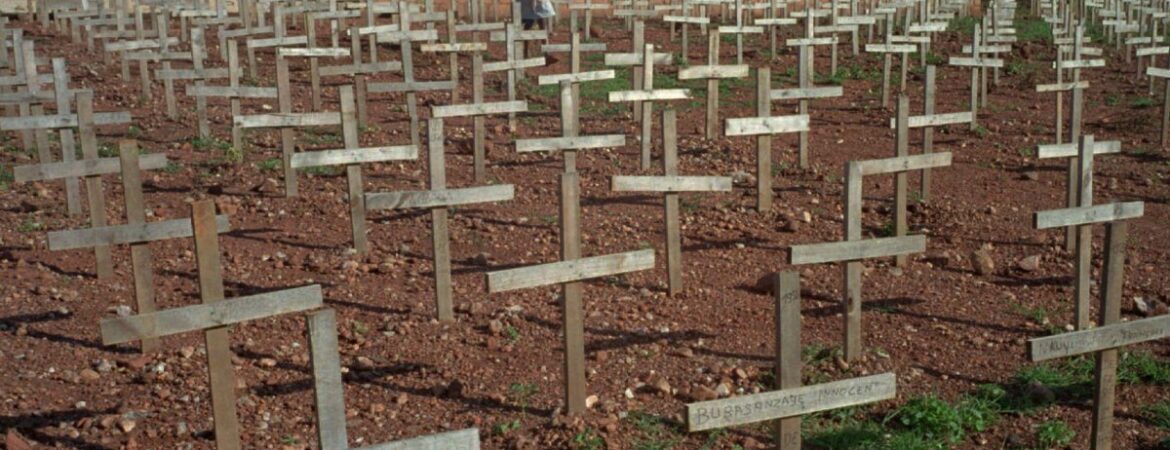
To commemorate the unfortunate events that transpired in history the government established various genocide sites. UNESCO later recognized these and Nyungwe among sites of importance. Below we shall unveil in detail the only two UNESCO sites in Rwanda.
Nyungwe Forest National Park
Nyungwe Forest National Park is among the UNESCO sites in Rwanda, located in the far southwestern region of Rwanda close to the border with Burundi. Establishment in 2004 from a forest reserve, that had originally designated back in 1933. The dominant vegetation in Nyungwe is Afromontane. The park spans over 1,019 square kilometers of Afromontane rainforest, bamboo, grassland, and wetlands. This park is strategically located between 2 of the largest rivers in the world, Congo in the west and the Nile in the east.
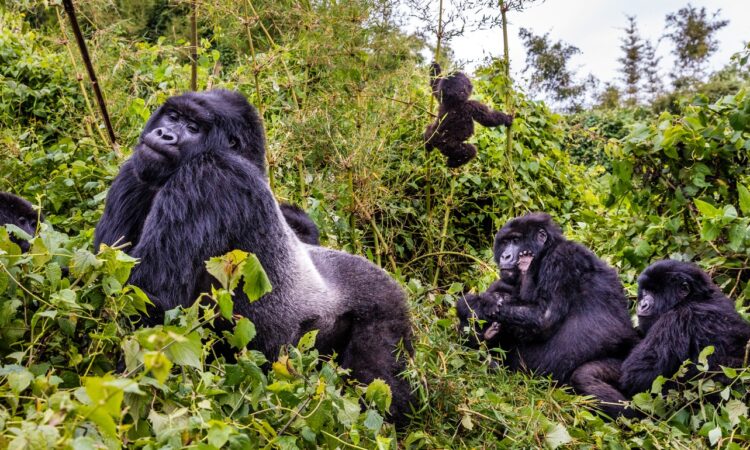
Nyungwe Forest National Park has over 300 bird species, 1068 flora species, and 85 mammals including 13 primate species such as chimpanzees, golden monkeys, colobus monkeys, vervet monkeys, blue monkeys, and red-tailed monkeys to mention but a few. These and more make this park an incredible natural site that led to its recognition as a UNESCO site in 2023. A 3 days Nyungwe forest chimpanzee safari is among the best experiences here.
Genocide Memorial Sites
The 1994 Rwanda genocide was a 100 days of terror, characterized by terrible loss of human lives of property. The country saw the tragedy unfold right before its eyes as the international community and peacekeepers looked on. The genocide happened after the death of President Juvenal Habyarimana. He died in a plane crash after some mysterious people shot it down. The Hutu regime blamed the Tutsi community for this, thus sparked the tragedy.
In April 1994, the armed Hutu militias declared an ethnic cleansing war against the Tutsis and anyone who sided with them. This declaration followed mass killings, rape, and massacres, fueled by some leaders on mass radios and television. Over a million people lost their lives in those 100 days of the genocide. During the Transitional Peace Talks in Kigali, the 3rd battalion of the Rwanda Patriotic Front used the former parliamentary building as its protection unit.
These talks aligned with the follow-up agreements established during the former meeting in Arusha, Tanzania at the beginning of 1994. Over 600 soldiers of this 3rd battalion acting under orders from the chairman of the high command on a peacekeeping mission fought the genocidal forces. They ended up successful and toppled the oppressive regime. In memory of the victims, they established several sites to honor them. By 2023, these sites had gained a lot of attention to the point of inclusion as UNESCO sites in Rwanda. They include.
Bisesero Genocide Memorial Center, is among the UNESCO sites in Rwanda, located on Muyira Hill. At this site at least 40,000 people tragically lost their lives. Renowned as a place for the survivor’s resistance of the massacre. Also several Tutsis fled to this place to seek refuge, escaping massacres, taking advantage of its remote, difficult to access terrain.
Murambi Genocide Memorial Site, is among the UNESCO sites in Rwanda, established in 1995 after the genocide. It shelters remains of 50,000 victims killed during the genocide. At the start of the genocide, over 50,000 people sought refuge in Murambi. At this time, construction of a technical school occurred. However, their assailants attacked them and killed most of them due to lack of water and food. They could not defend themselves out of weakness. Those who flew to the nearby church died in the days that followed.
Nyamata Memorial Center, is among the UNESCO sites in Rwanda. It was just a church before 1997. Then it transformed into a memorial of the people who died in the genocide. A mass grave behind the Nyamata church contains more than 45,308 victims of the genocide. You could see the murder weapons and clothes of the victims displayed in the chapel. There is a grave of one victim in the church. Some of the victims murdered in the church have their remains beneath the chapel itself.