Why visit Uganda? Come here to see the beautiful wildlife, landscapes, cultures and others. Nonetheless, a billion reasons or more exist for traveling here. Firstly, before independence, Uganda was a protectorate of the British Empire from 1894 to 1962. The Imperial British East African Company transferred its administration rights of territory of mainly Buganda Kingdom to the British government. This occurred in 1893, just before the start of the twentieth century.
The capital by then was Entebbe and the common languages spoken consisted of English, Luganda, Swahili, Southern Luo and Runyakitara. This country gained Protectorate status in 1894, before self-governance in 1961. The year that followed saw the country gain its long awaited independence, specifically on the 9th of October, 1962.
Geography of Uganda.
Uganda is a landlocked country in East Africa, bordered to the East by Kenya, to the north by South Sudan, and West by DRC. To the South-West by Rwanda and the South by Tanzania. Area occupied by the country totals to 241,038km², with 15.39% of it covered by water. Uganda’s time zone is abbreviated as EAT (East Africa Time) and UTC-GMT offset is GMT +3h Standard Time. Uganda’s capital city known as Kampala and other 8 regional cities spread across the country.
Climate of Uganda.
Uganda’s climate is largely tropical with two rainy seasons per year, March to May and September to December. The Northern region, about a quarter of the country lies outside the tropical belt, hence experiences a single rainy season. This happens between March to October. The rest of the country lies within relatively humid equatorial climate zones. Rainfall received depends on topography, prevailing winds, lakes and rivers. This results in the large differences in rainfall patterns across the country.
Uganda’s location in the tropics and across the equator also results in the country’s weather and seasons. Large-scale Indian monsoon, Congo air mass, Indian Ocean Dipole (IOD) and Inter Tropical Convergence Zone (ITCZ) also constitute the determinants.
Top 6 reasons for visiting Uganda.
- Equator.
The equator is a circle of latitude 40,075km in circumference that divides Earth into the Northern and Southern hemispheres. It is an imaginary line located at 0⁰ latitude, half way between the north and the south poles. It is located on the Mbarara – Masaka – Kabale highway. This makes it an important and famous stop over for travelers heading for Uganda Safaris to the southwest region.
- Source of River Nile.
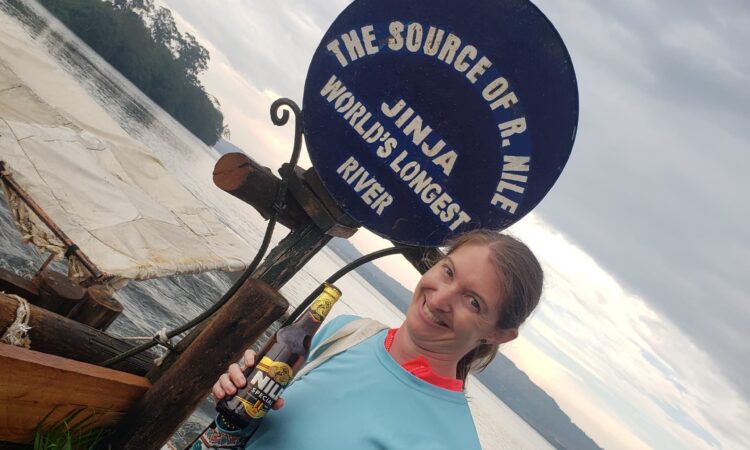
The R. Nile is the major north-flowing river in north western Africa, still considered the longest in the world. It is about 6,650km (4,130mi) and covers countries such as Tanzania, Uganda, Egypt, Ethiopia, and South Sudan. However, the most important thing is that it starts its journey right from Uganda, in L. Victoria.
- Mountain gorillas.
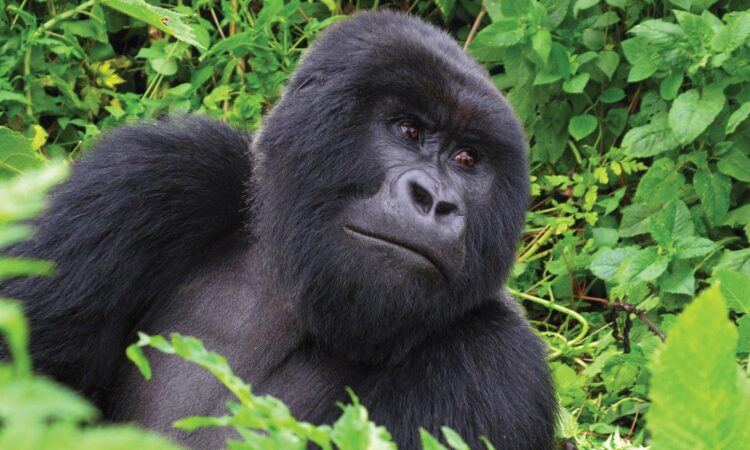
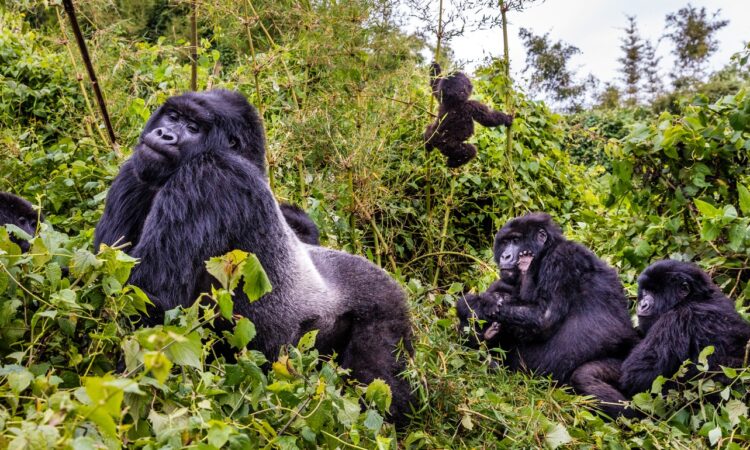
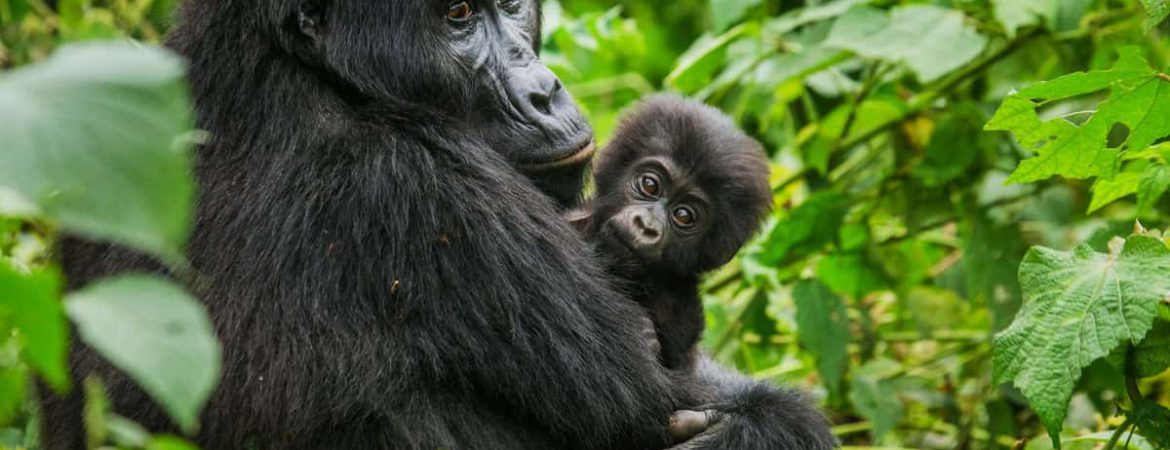
Uganda has 2 places where tourists see mountain gorillas. One is Mgahinga Gorilla National Park in southwestern Uganda. Mgahinga is a stunning area of volcanoes and component of the Virunga chain. The latter consists of towering volcanoes that extend into the DRC and Rwanda. Also, see gorillas in Bwindi Impenetrable National Park. This forest harbors over 18 gorilla families, well habituated for tourism and consisting 53.9% of total mountain gorilla population worldwide. Both destinations offer the best spots to do gorilla safaris in Uganda and worldwide.
- Culture of Uganda.
There is a wide range of ethnic groups here, with many different languages spoken. They include Luganda (commonly spoken in the capital), English (spoken by the elite) and Swahili. Bantu is the largest ethnic group, and encompasses tribes like Baganda, Bagishu, Basoga and Banyakitara. Fifty six tribes in Uganda presents unique traits, norms, economic activity, languages and lifestyle. Most men in Uganda wear Kanzu, a white or cream-coloured robe that reaches the ground. Meanwhile, the women put on a long dress called a gomesi with a sash tied around their waists. We also have different cuisines, songs and the dances.
- Nature of Uganda.
Uganda boasts diversity in nature, with water bodies such as lakes and rivers. Other key features include mountains, small hills, man-made and natural forests and National parks. Moreover, there exists 8 major rivers such as Victoria Nile, the Achwa, Okok, and R. Nile in the north. Rivers Kafu, Katonga and Mpanga, Kazinga channel in the west etc. The forests cover 24% of the total area and national parks are 10 in number. Uganda is as well home to 2802 mountains.
- Food in Uganda.
The most common dish prepared is the Matooke (bananas), steamed while wrapped in plantain leaves. When ready, its mashed. Afterwards, its served to you in a plate. With its beautiful aroma, the food is commonly mixed with ground nuts, meat or Eshabwe. You can find this dish with diverse ethnic groups. Nevertheless, they also offer other food crops. Explore cassava, sweet potatoes, white potatoes / Irish potatoes, yams, pumpkins and many others. Each ethnic group / tribe has a different cuisine, that depends on their culture.
Where to stay when you visit Uganda?
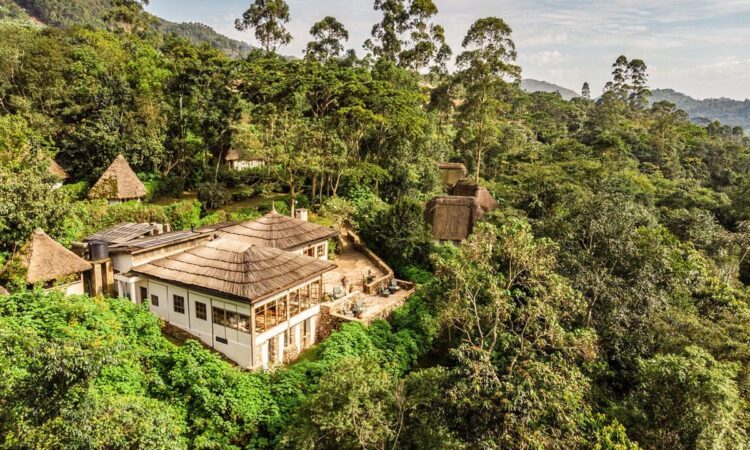
Find different accommodations, categorized as luxury, mid-range or budget and campsites. They offer the best services to visitors. Some of the luxury hotels in Uganda include Serena hotel in Kampala, Sheraton hotel, Pearl of Africa hotel and others. Mid-range hotels include Africana hotel, Source of the Nile Suites, Pakuba Safari lodge and Twin Lakes Safari Lodge etc. Budget hotels offer pocket-friendly accommodation options. They include Via Via Travelers Café, Airport Guesthouse, Boma Guesthouse, Sunset Hotel and Blue Monkey Guesthouse in Kampala and Entebbe.
How to get to Uganda?
International borders of Uganda remain open throughout the year. The best way to travel is by air through Entebbe Airport. Alternative land borders through Kenya (at Malaba, Busia), and South Sudan ( at Afogi, Nimule) exist. Visitors must possess a valid yellow fever certificate which is a required part of the visa application.
What is the best time to visit Uganda?
The best time to visit Uganda is in any of the two dry seasons experienced. Between December and February and between June and September. Views of physical features and wildlife is very favorable in these periods.