Even with so many, the 8 museums in Rwanda you should visit include Nyanza King’s Palace Museum and Kandt House Museum. The country’s impressive rise to the top of the development chain has been a bumpy road of struggles for many years. Their development and stability are a true testimony of resilience among the populace. Its history is shaped by events from the colonial days to the present after independence. This small country was an enclave of instability and civil war among peaceful nations, thus a backward development journey. However, it has come up to overtake most of its neighbors and become a fast-developing country in Africa.
Museums in Rwanda are a form of representation of the country’s history, heritage, and culture. Some museums also represent specific events that unfolded in history to shape the country’s present and future. A case in point is the 1994 Rwandan genocide of the Hutus against the Tutsis and their sympathizers. This is one of the most traumatic events in the history of mankind and the most tragic. The Rwanda genocide of 1994 was over 100 days in which more than 800,000 people died, mostly Tutsi’s. It lasted over 100 days before being ended by the Tutsi rebels who came from Uganda. Museums in Rwanda you should visit include.
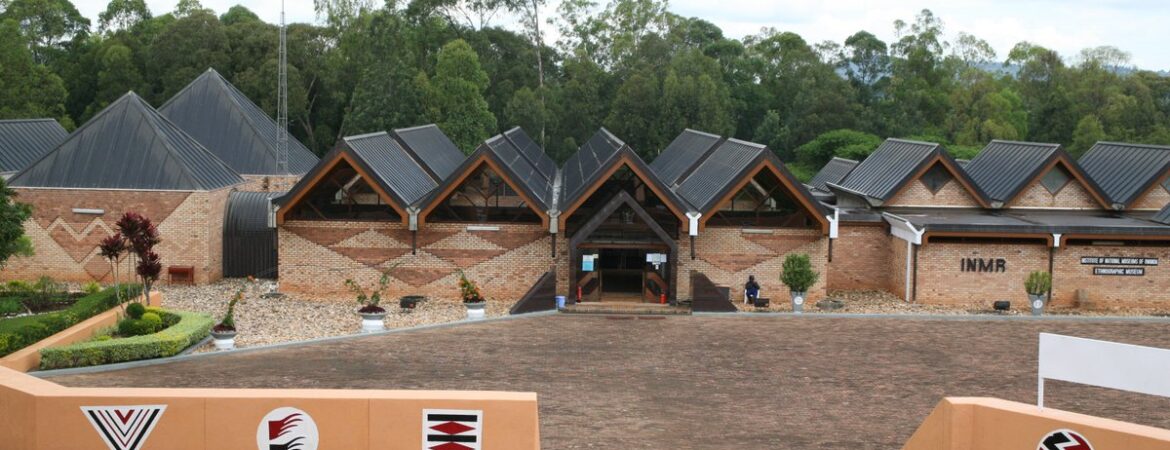
Ethnographic Museum of Rwanda
Built in 1989 by the King of Belgium as a gift to the Rwandan government. It showcases some unique archeological artifacts of the country and the cultural heritage of the people of Rwanda. With 7 galleries, each displays historical items such as traditional hunting tools. Others include animal husbandry tools, arts and crafts such as weaving works like mats and baskets, woodwork, and pottery. Rwandan social life prior to civilization displayed here includes their cultural beliefs, values, and norms.
The museum also showcases the social and cultural importance of the traditional long-horned cattle. A section of the museum displays what the traditional homestead of the King of Rwanda used to look like. Queen Rosalie Gicanda got killed in the same place. She was the wife of King Mutara III Rudahigwa. Cultural dances entertain the visitors as they enter the museum to showcase their traditional dances and songs as part of their heritage.
Nyanza King’s Palace Museum
A discussion about Rwanda’s history and also present is incomplete without a tale of events from the monarchical days. This means a mention of the King’s palace at Nyanza. The King’s Palace at Nyanza is a traditional site of the home of the then King of Rwanda. Before its establishment at Nyanza, the King’s palace remained mobile, often set in other areas across the country. However, while at Nyanza, the topography of the area stole the King’s admiration, and this site became his permanent residence. It represents the many kingdom battles fought and won here.
The building process employed the use of traditional materials crafted in the form of a bee hive and thatched, with a doom shape inside. On the palace area, as many as 2,000 inhabitants live there. Meanwhile the back of the palace serves as a kraal of the Inyambo long-horned cattle of the king. These majestic cows represent royalty with their striking beauty and gentleness. His majesty’s subjects dressed them with traditional jewelry and sang traditional lullabies for them. A visit to the Nyanza King’s Palace Museum taps into the traditional life of Rwanda’s monarchy life.
Kwigira Museum
The Kwigira Museum is located in the Nyanza district on Rwesero Hill. It was opened in 1958 after its construction which took a year. The museum showcases artifacts of the traditional kings of Rwanda displaced on portraits, and texts explaining the homegrown initiatives that revived the nation. This museum, however, was initially built to house the King of Rwanda Mutara III Rudahigwa but he unfortunately died before his inauguration. The building was then turned into government property to host government bodies like the Supreme Court, the Court of Appeals, and the Financial Court.
Rwanda Liberation Museum
Also known as the National Liberation Museum Park. It offers more than enough of untold stories of the events that transpired during the liberation struggle. They exist on various displays such as texts and artifacts used in the liberation war. See the Arusha agreement, campaigns against the genocide, and the Muhavura radio utilized in these campaigns. Move to the Gicumbi district to find the Rwanda Liberation Museum. This is an area that was once a hotspot for the Rwandan Patriotic Front. For context, this was military group that began the liberation struggle in October 1990 until July 1994 with the end of the Rwandan genocide. The museum also hosts the bunker of the then head of high command the current president of Rwanda.
Museum for Campaign against Genocide
The museum is located in the former parliamentary building in the heart of Kigali. This museum is a true testimony of the resilience that ended the Rwandan 1994 genocide. In 1993 as the Rwandan Patriotic Front soldiers about 600 of them used the parliamentary building as their protection unit in agreements to form a transitional government in the Arusha Peace Accord. As the genocide intensified, the chairman of the high command ordered the soldiers to rescue the victims and fight the perpetrators to eventually end both the genocide and the regime. Peace in the country resulted. Other things to see here include the portrayal of a sick bay to treat wounded soldiers. More portrayals include a hero’s garden to honor the fallen soldiers of the campaign, and a 12.7 mm machine gun on the roof that provided fire support to the campaign.
Kandt House Museum
The museum named after Richard Kandt, is located in Nyarugenge Hill in Kigali city. Richard Kandt was the first colonial governor of Rwanda and the museum was his home. It has three sections which present the different events that shaped Rwanda. Section one displays the years before the colonial era, specifically ruled by the traditional kings. In the second section, find the coming of the German colonialists, who took over the country after the Berlin Conference of 1884. Notice Kandt’s early years and experience also displayed here. Last section of the museum displays the years towards independence and the post-colonial era to the current Rwanda. Also, in the museum, the steps followed in the development of Kigali as a capital city is displayed.
Rwanda Art Museum
A visit here is like when you take a ride through history and culture. The museum displays artifacts that date back as far as the 1800s. Art displayed at the museum represent the traditional heritage of the country. Once called the Presidential Palace Museum because it housed Juvenal Habyarimana, the former president of Rwanda. He died in a plane crash, whose wreckages still exist there for tourism.
Museum of environment
This is a conservation hub where visitors get to learn more about non-renewable and renewable sources of energy. The importance of this is primarily environmental protection. Located along the shores of Lake Kibuye, Museum of Environment sits on a two-story building with a rooftop that displays the conservation of traditional medicinal plants native to Rwanda.
Why visit with us?
If interested in visiting the museums in Rwanda, trust Standard Safaris fully. We have an experienced team that can deliver seamless and safe experiences. Our excellent reputation for Rwanda tours including visits to the country’s museums if proved by numerous trips. Besides that there are rave reviews on TripAdvisor written by travelers who loved our services. Contact us for your customized tour package at any time.